Table of contents
In a retail world racing toward the next trend, boutique décor has started to enjoy a second life, not behind a counter but in living rooms, kitchens and entryways, where shoppers turn display pieces into personal signatures. The shift is not just aesthetic; it is practical, too, as more households look for character without paying luxury markups, and as reuse moves from niche habit to mainstream reflex. What looks like “just styling” in-store can become a durable, functional centerpiece at home.
Why boutique décor looks expensive at home
It is not magic, it is staging. Boutiques rely on a well-documented retail principle: strong visual merchandising increases perceived value and keeps customers in the space longer, and the longer people browse, the more they tend to buy. Research synthesized by retail analytics firm RetailNext has repeatedly linked longer dwell time to higher conversion, while academic work on atmospherics in retail has shown how lighting, texture and scent influence purchasing decisions. At home, those same ingredients read as “designer,” even when the object itself is simple, because the context tells your brain it belongs to a curated world.
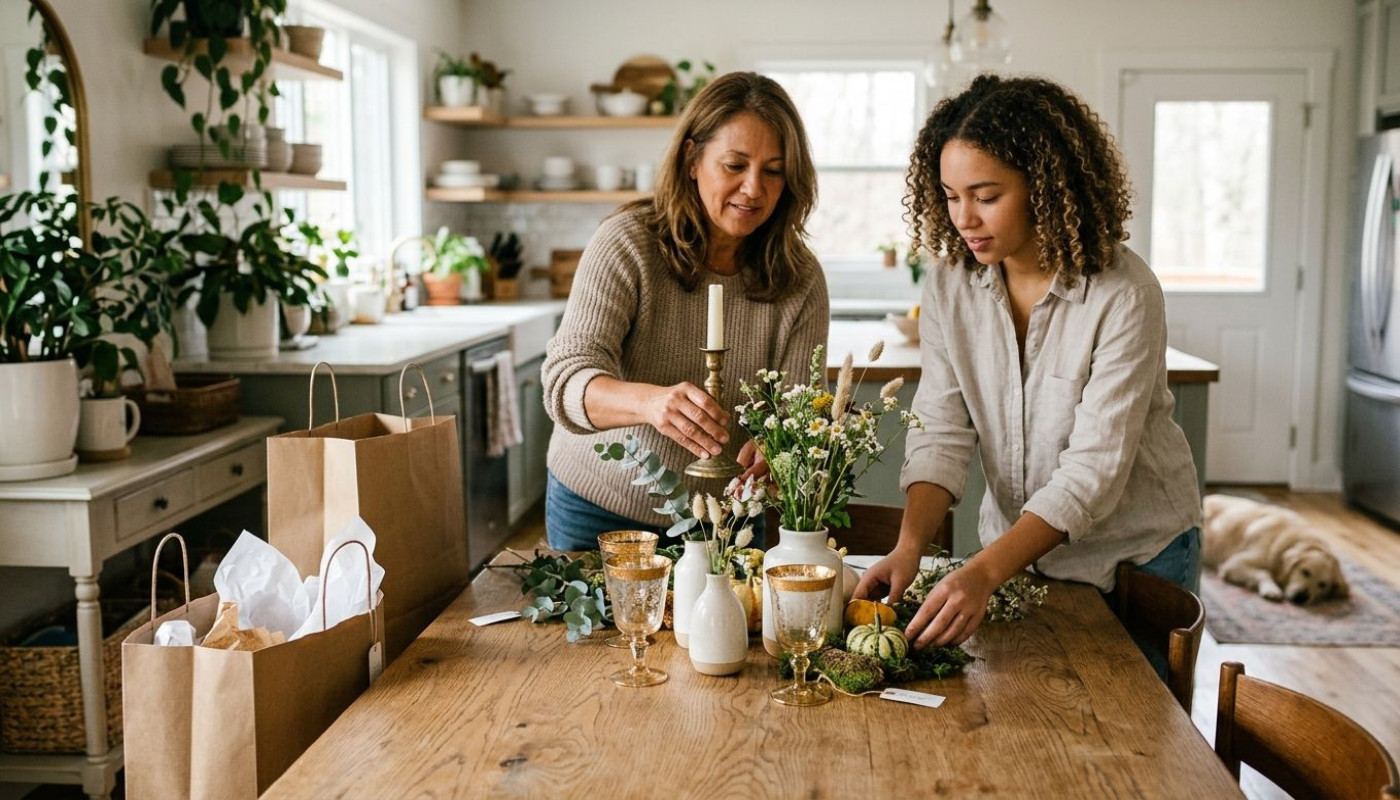
That is the first lever to reuse: you are not buying an object, you are borrowing a composition. Think of the classic boutique trio, a low table, a vertical element, and a tactile layer, such as a vase, a branch and a folded textile. Translate it onto a console, a sideboard or even a kitchen counter, and you get the same sense of intention, with no renovation required. The good news is that the most effective boutique pieces are often the most adaptable, because retailers choose items that photograph well, stack easily, and survive constant handling, which makes them unusually suited to daily life.
Start with scale, because it is where most “nice objects” turn into clutter. Boutiques use fewer, larger anchors rather than many small ornaments, and they leave negative space so the eye can rest. At home, that means choosing one statement vessel or tray as the base, then layering two or three supporting elements, and stopping before it feels like storage. A rule used by many stylists is the “odd-number grouping,” often three items of different heights, and while it is not a law, it is a reliable shortcut for balance in a vignette.
Material is the second lever, and boutiques lean on natural textures that read as timeless: ceramic, raw wood, linen, stone, glass. If your home is modern, those materials add warmth; if your home is traditional, they add calm. Pay attention to finish, too, because retail props are typically matte or softly reflective, never aggressively shiny, and that is why they look premium under mixed lighting. Reusing them is less about copying a store and more about keeping that quiet, tactile language, room after room.
Trays, cloches, pedestals: the quiet heroes
They do not shout, yet they do all the work. In boutiques, trays, cake stands, pedestals and cloches create hierarchy, protect products, and guide the eye, and at home they can solve real problems: organizing surfaces, keeping items clean, and making everyday essentials feel intentional. A tray on an entry console can turn keys, sunglasses and mail into a “landing zone” instead of a mess, and a pedestal can lift a candle or plant just enough to feel like a focal point.
In the kitchen, the boutique trick is to treat functional items like curated objects, and to group them by use. A wooden board, a salt cellar and a small carafe become a cooking station, and because they live together, they look designed rather than improvised. Cloches, meanwhile, are not just for pastries; they are surprisingly useful for protecting scented soaps in a bathroom, keeping dried botanicals from gathering dust, or even shielding a small stack of coasters on a humid day.
Pedestals and risers also solve a common apartment issue: limited storage. By adding verticality, you create a second “shelf” on a surface, which is exactly how boutiques make small tables feel abundant without being crowded. Use a riser in a bathroom to lift skincare bottles and free space for a hand towel, or in a home office to separate charging gear from stationery, and suddenly the surface reads as orderly. If you want the boutique look without buying new, a sturdy inverted bowl or a thick hardcover book can stand in for a pedestal, as long as the base is stable and the top is flat.
One caution matters: these pieces become clutter magnets if you let them. The discipline that makes boutique displays work is editing, and the most convincing home styling is the one that changes seasonally, not weekly. When you feel the urge to add another object, swap instead of stacking, and keep at least a third of the surface empty. That negative space is what makes the arrangement look intentional, and it also makes it easier to clean, which is the unglamorous secret behind spaces that always look “finished.”
Textiles and scent, the atmosphere makers
Want the fastest transformation? Change the air. Boutiques invest heavily in atmosphere because it shapes memory, and scent is central to that, with studies in environmental psychology and retail marketing showing that pleasant ambient scent can improve mood, increase time spent in-store and raise perceived product quality. At home, you can borrow the same mechanism, but with more control, and less intensity, because a living space needs to be livable, not performative.
Start with textiles, because they bring softness and absorb sound, and they are often the most reusable boutique “décor.” The classic folded throw over a ladder, the stack of linen napkins, the draped tablecloth that brushes the floor, these are store moves that translate beautifully. Use one textile as a backdrop, such as a neutral runner on a sideboard, then place a ceramic bowl or a vase on top, and the whole scene gains depth. The key is to keep the palette restrained, and to let texture do the talking: slubbed linen, boucle, washed cotton, wool.
Scent should follow function. In an entry, a crisp note, such as cedar, eucalyptus or clean musk, sets a “leaving and returning” tone, while in a bedroom, softer profiles feel calmer. The boutique mistake at home is over-layering, candle plus diffuser plus room spray, and the result is sensory fatigue. Choose one delivery method per space, and give it time to settle, because a scent that feels subtle to you may feel strong to a guest. If you have pets or small children, place diffusers out of reach, ventilate often, and avoid open flames when you cannot supervise.
If you want a more sustainable angle, reuse vessels. Many boutique candles come in thick glass or ceramic containers designed to look decorative even after the wax is gone, and they make excellent catchalls for cotton pads, matches, paper clips or small tools. Clean them thoroughly, and they become long-term storage pieces that keep a unified look across rooms. For more ideas and to source pieces that match this understated, boutique-inspired approach, you can check out this url and map what you like to what your home actually needs.
From window display to real life
A display is a promise, and the trick is making it practical. Window setups rely on bold composition, strong contrast and a clear focal point, and those principles work at home when you translate them into daily routines. Instead of copying the entire scene, steal the structure: one anchor object, one supporting cluster, one breathing zone, and a background that frames it, whether it is a wall, a mirror or a piece of art.
In a living room, for example, the boutique “centerpiece” logic works best on the coffee table, but only if you leave room for actual life, a cup of tea, a book, a board game. Use a large tray as a movable base, add a low bowl for remotes, and one vertical element, such as a vase with a single branch, and the table still functions. In a dining space, borrow the retail idea of repetition: three identical candlesticks or a series of small bud vases creates rhythm, and it reads elevated even when the objects are inexpensive.
Bathrooms and bedrooms are where boutique reuse can feel most luxurious, because small changes register quickly. A shelf with neatly folded towels, a lidded jar, and a small framed print can make a rental bathroom feel intentional, and a bedroom dresser topped with a tray, a carafe and a small lamp becomes a “hotel moment.” The crucial difference is durability, because home items get touched every day. Choose pieces that tolerate moisture, heat and cleaning, and avoid porous materials near sinks unless they are sealed.
Finally, treat boutique décor like a wardrobe, not a museum. Rotate seasonally, store what you are not using, and keep a small box for “vignette parts” so you can refresh a room in ten minutes. This is how professional stylists keep spaces looking current without constant shopping, and it is also how you avoid the slow drift toward clutter. The most convincing homes are not filled with objects, they are filled with decisions, and reuse works when every piece earns its place.
Plan it like a stylist, not a shopper
Make it work this week. Before buying anything, measure your surfaces, decide where a centerpiece must leave functional space, and set a clear budget for two anchors and three supporting items. If you are booking delivery, group purchases to cut transport costs, and look for seasonal promotions. In some areas, repair or upcycling workshops can be subsidized by local programs, and they are worth checking before replacing a piece.
On the same subject

What are the benefits and challenges of yacht jobs ?

What are the enhanced reading features on e-readers?

What are the advantages of wearing a durag ?

How to win sports betting?

3 tips for exploring Universal Hollywood Studios in Los Angeles

What are the conditions attached to visitax receipt obtention in Cancun ?

The inDriver transport service is packing its bags in Melbourne

What are the different ways to become a philanthropist ?

How to choose your sexy silicone?

How to create a conservatory or glass dome?

Which industries can benefit from a chatbot?

How do you choose a restaurant franchise?

How to take advantage of new web design inspiration and creations?

Trans women dating site

How can I get contracts for my web agency?

Three things you can do with Amazon Alexa, the Voice Assistant

Morocco: why is Marrakech the big tourist city?

3 interesting facts about Kratom
